Saturday, August 10, 2013

The fall of the Inca empire

Inca emperor Atahualpa

Ancient culture flourished in the Cajamarca region in the northern highlands of Peru from about four thousand years ago. It was an administrative center of Wari culture that flourished throughout Peru about 600-1100 AD. The Inca conquered the area in 1460, and it became a major city on the road between Quito and Cuzco.

Gardens at Baños del Inca
When the Inca emperor Atahualpa was en route from Quito to Cuzco in 1532 he stopped over in Cajamarca to rest with his troops, estimated at around 40,000 to 80,000 men. They were camped at a place now called the Inca Baths (Baños del Inca). 


These steaming pools are fed by very hot thermal water from volcanic sources nearby. A public pool is nearby and is very popular with the locals.


This was the emperor's private bathing pool, located probably within his sumptuous quarters.


 The Spanish conquistador Francisco Pizarro arrived on November 16, 1532. This was the first encounter between the Spanish and Peruvian forces, and was the beginning of the end of the mighty Inca empire based in Cuzco. 

Though the Spanish had only 168 men and horses and guns, the thousands of Inca troops were overwhelmed by the tactics of the Spanish. Atahualpa was imprisoned and held for ransom. The emperor agreed to have gold and silver objects brought from distant locations. He was to be freed after filling a room full of the precious metal. The room in which he was held for a year is the only surviving Inca building in Cajamarca.

Cuarto de Rescate, Cajamarca
Pizarro did not keep his word, and when they had collected their fill of gold and silver Atahualpa was executed. I recently visited the Cathedral of  Córdoba, Spain, located in the middle of the Mezquita, an ancient Moslim mosque, where there is a permanent exhibit of gold and silver objects fashioned from the melted Inca objects. It was a chilling experience knowing that the church had accumulated tons of Inca gold and silver to serve their purposes in Spain.
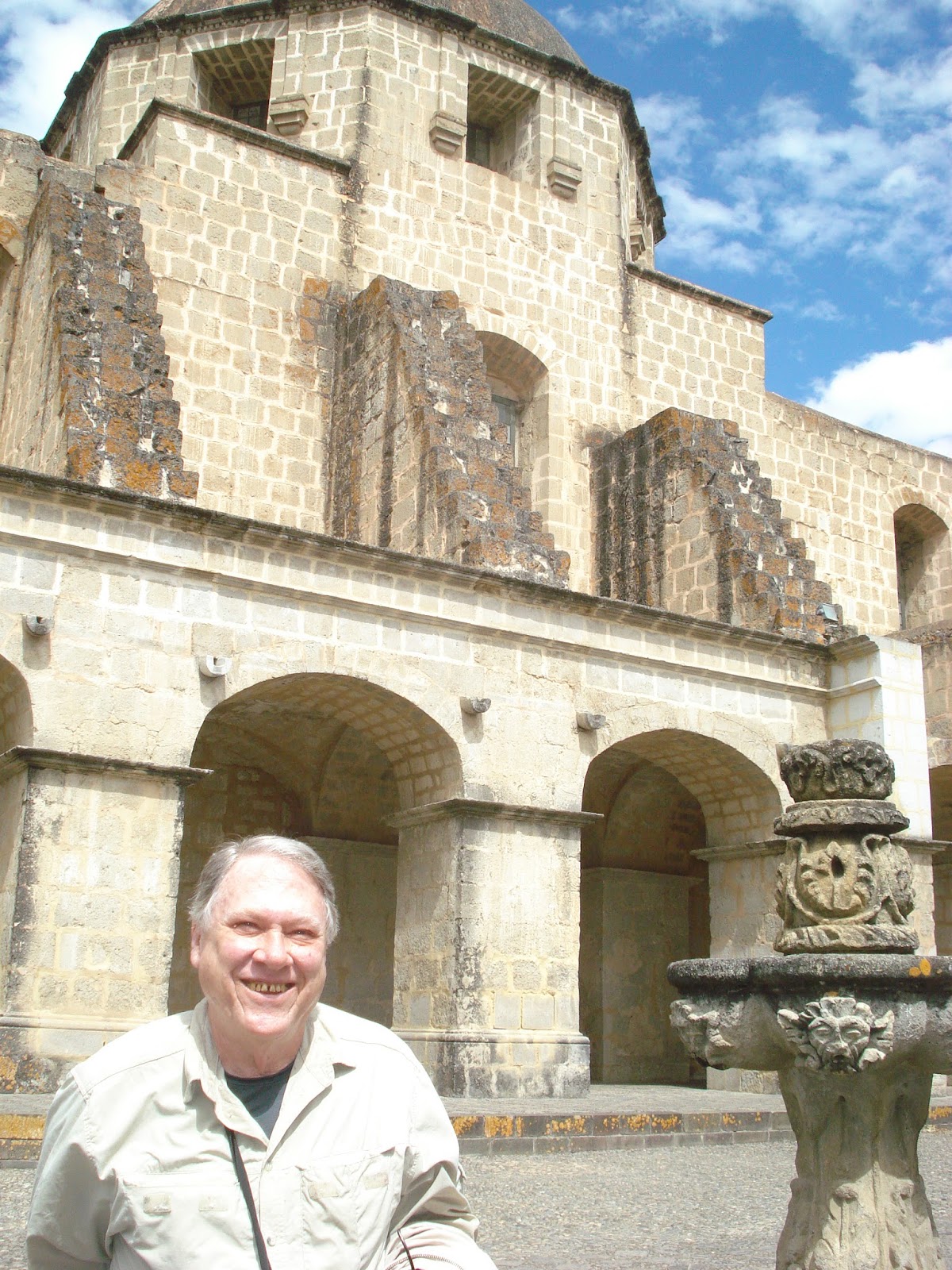

Not far from the main Plaza in Cajamarca is the Belén complex, consisting of a church and hospital built on the site of ancient Inca buildings that were destroyed. It was constructed between 1627 and 1774, using local volcanic rock.


My guidebook states that on the façade of the Belén church is a statue of a woman with four breasts, an affliction of women in a nearby village.

Thursday, August 8, 2013

Ventanillas de Otuzco

About five miles northeast of Cajamarca is the village of Otuzco, set in a fertile, green valley.


The people who lived in this region of the northern highlands of Peru for milenia are referred to historically as the Cajamarca culture. The Wari conquered this area about two thousand years ago and made Cajamarca one of their many administrative centers, connecting by road with the Wari capital in Ayacucho. The Inca conquered the region in 1460 AD, connecting their capital in Cuzco with Quito, Ecuador. The Spanish, led by Francisco Pizarro, took over in 1540.


The Ventanillas (“little windows”) of Otuzco is a large stone outcropping that was used for burials. This huge necropolis consists of 337 graves sculpted in the rock, superimposed one on top of the other and protected against the rain with narrow channels.


The niches have been looted long ago. It seems that the elite were first interred in the ground. The body was then exhumed, and the cleaned bones were placed in a niche, which was then sealed.


Most niches appear rather shallow, with room for the bones only. Others are reported to contain galleries of graves that extend 33 feet into the rock. A few (as in the center of the photo) were not completed, and are shallow depressions in the rock.


The reddish color is the lichens growing on the rock.


This ragtag group of boys entertained us with a typical Andean folksong. A short video is available here.


This is typical construction in the area. The adobe bricks are made from the local soil. The layers are separated by stones, allowing air to flow.


After visiting the Ventanillas, our tour group stopped at the Jardín de Hortensias (hydrangea gardens) to see the flower gardens, sample some local food and drink, and to buy handicrafts. Click here to see photos of the gardens with text in Spanish.


Food is available for purchase, such as fried pork (chicharrones) and corn tamales (humitas)


Cuy (guinea pig in English) was domesticated thousands of years ago in the Andes mountains in the region of Ecuador, Bolivia and Peru. They are commonly found in households as pets and as a food source. They are herbivores, living off kitchen scraps, and are part of the Andean diet. They contain high amounts of omega 3, low in fat, and high in proteins.


Fried cuy (courtesy Wikipedia)

Tuesday, August 6, 2013

Cajamarca, Peru

Cajamarca from Bellavista lookout
Cajamarca is located in the northern highlands of Peru, 8,920 feet above sea level, with a population of over 200,000 people. It has an equatorial climate, mild, dry, and sunny, which creates very fertile soil. The area is well known for its cheeses and dairy products. This is only a partial view of the extensive and level plain below. The "bump" in the left of center in the photo is Santa Apolonia hill. There is a carved stone on top where it is thought the Inca emperor sat to review his troops.

Cathedral of Cajamarca
The Cathedral is on the plaza, facing the San Francisco Church directly across the plaza. Construction began on the Cathedral in the late 17th century and was only recently finished.


The façade is considered one of the remarkable achievements of Latin American art.

San Francisco Church


This fountain in the plaza was built in 1692 to commemorate the landing of Columbus in America.


A typical street in Cajamarca, near the plaza. My hotel is just behind me. 


The courtyard of my hotel, in typical Spanish colonial style. The courtyard is open with no roof. These old houses make up most of central Cajamarca. The fountain has running water on Sundays.


Many streets are for pedestrians only