Fifty years ago, on May 22, 1960, a massive 9.5 earthquake struck off the coast of southern Chile, the largest magnitude ever recorded. The epicenter was close to the city of Temuco, but it was Valdivia that was greatly affected, 520 miles south of the capital Santiago. It was followed by a tsunami that reached Hawaii, Japan, the Phillippines, New Zealand, Australia, and the Aleutian Islands in Alaska. At Corral, the main port for Valdivia, the water level at first rose 13 feet before receding. Then a 26-foot wave struck the coast, almost obliterating the village. Ten minutes later another wave struck, measuring 33 feet.
The ship
Canelos sank at the mouth of the Valdivia River after drifting one mile back and forth. Locals reported that people boarded the ship to look for food items as they were isolated around the Bay of Corral. The ship is still visible in the river. I took this photo in late 1964, almost 4.5 years after the quake.
(Click on photos to enlarge)

Schwenke and Nilo sing about the ship
Canelos:
"It was a large cargo ship
like those that loved wheat,
carrying wild fruits
to the ports of Spain.
And now it’s full of spiders
like a rotting bird tossed aside,
the Canelos entombed"
Valdivia lies about 11 miles upriver from the Bay of Corral. When I arrived in late 1964 to teach music at the Austral University, damage from the quake was evident all around. The land had sunk one to two meters in the area surrounding Valdivia. Many buildings remained standing but the ground floor was not used. People moved up to the next level.

Much of the farmland near Valdivia became useless as it flooded. This photo is from early 1965 just outside of Valdivia. There are still swampy areas nearby.

The Valdivia River is considerably wider here as these dead trees indicate. With the land at a lower elevation by one or two meters, this area remains flooded permanently.

A greater disaster was yet to come. The dam at Reñihue Lake would burst, releasing water from the seven lakes near Panguipulli. People told me about pieces of structures and dead cows floating down river toward the ocean.
The day before the quake, on May 21, the great folklorist, poet and singer Violeta Parra was in the south for a musical tour. She had performed in Chillán with her children Isabel and Ángel and the group Cuncumén. There was an earthquake around 3am. At lunch the next day she suggested that they return to Santiago, as they seemed to be heading toward the epicenter. Half jokingly she said, “I tell you the next earthquake will leave puppets without heads.” The group decided to continue the tour south and traveled to Puerto Montt by bus.
Early on the day of May 22, Violeta wrote a telegram to her home in Santiago. It was addressed to “God in Heaven: Dear God, how many threats of tremors, why not send a good earthquake.”
On May 22, the city of Puerto Montt invited the group to a
curanto on Tenglo Island. Violeta stayed behind in order to interview fishermen in Angelmó about their music. The 9.5 quake struck at 3pm. The tour group apparently was able to return home to Santiago safely. (Recollections of Ángel Parra in “Violeta se fue a los cielos,” 2006). Puerto Montt was greatly affected by the event, with much loss of life and buildings.
The event was strongly felt further south on the island of Chiloé. Here is a scene at the waterfront in Castro in early 1965.

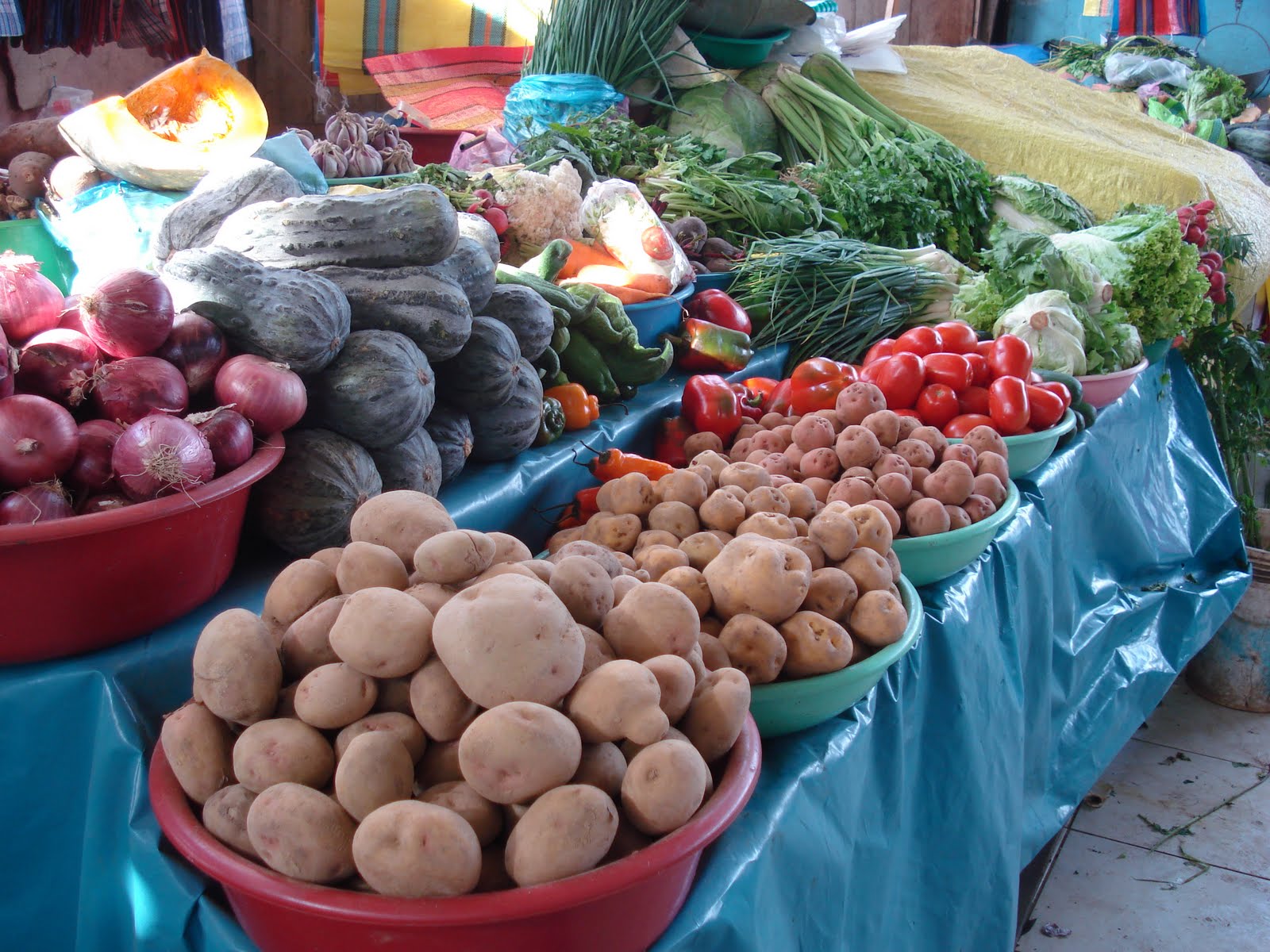
 In my travels I find the most colorful things to photograph are in vegetable and fruit markets. This market in Chiclayo, Perú, occupies some blocks in the city. Offering fresh produce, meat and fish, there are also piles of clothes, shampoo and toothpaste. Fresh fruit juice smoothies are available for about half a U.S. dollar. I missed the Mercado de Brujos, offering everything necessary for shamans in the practice of their profession.
 There is an astonishing variety of produce in the market. Many items I had never seen before.
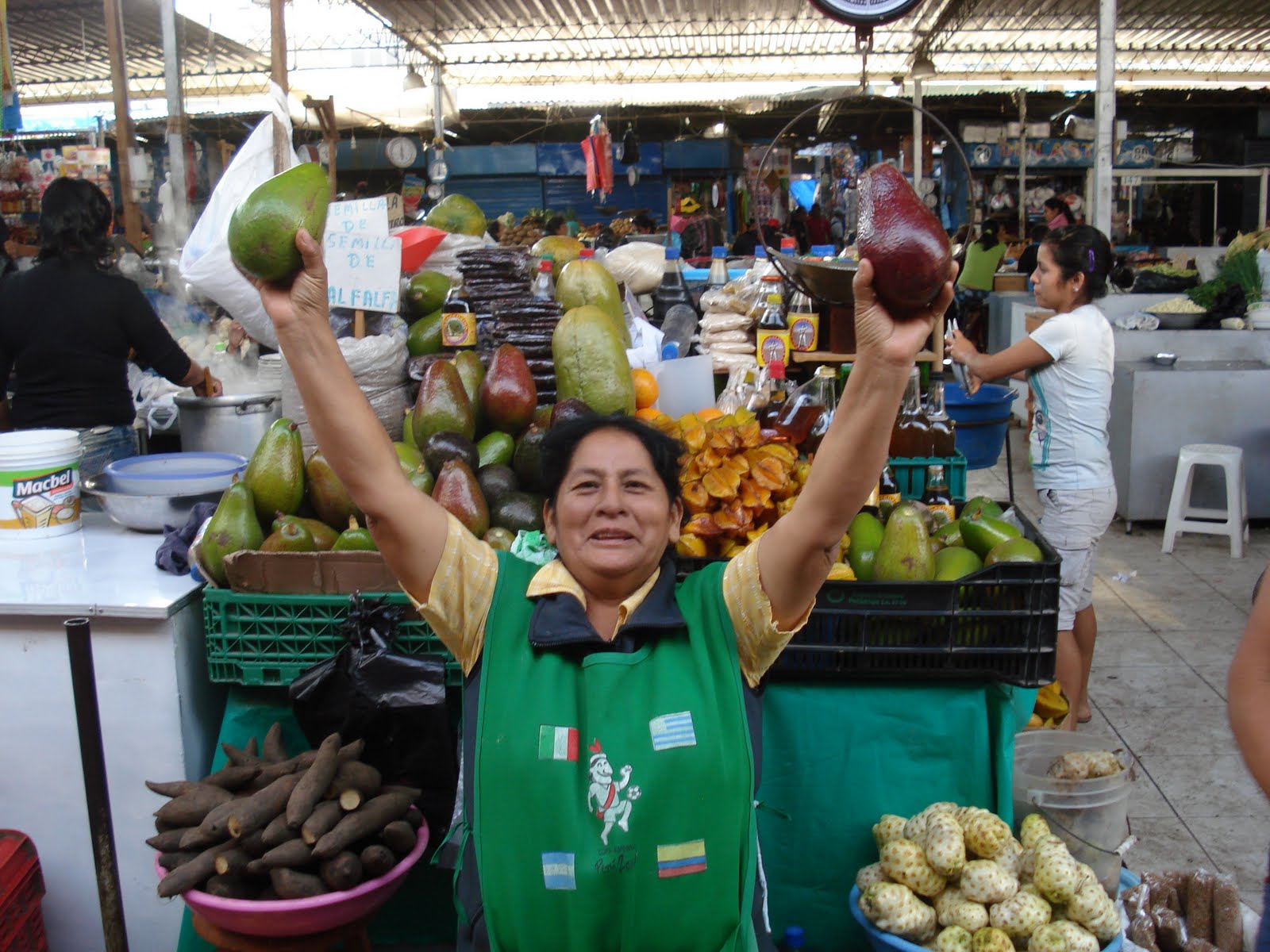
 These avocados are gorgeous, and easily 6 inches long. People tell me they grow even larger.
 The lady selling the avos poses for the camera. I wish you could see her giggling friends looking on.
 I had never seen purple corn before. Here it is used only for making chicha, a fermented drink that, when fresh, does not contain alcohol and can be very refreshing. It is also made from hops and peanuts.