Monday, March 24, 2025

Achao 2025


Click on any photo to enlarge.


Achao 1965


Achao 2025


60 years ago, I visited the village of Achao on Quinchao Island in Chile. As I wandered about, I met a group of children playing and they cautiously agreed to pose for a photo, never having seen a camera or a tall gringo. 

Hace 60 años, fuí al pueblo de Achao en la isla Quinchao en Chile. Mientras andaba arriba del pueblo, encontré un grupo de niños jugando, Como nunca habían visto una máquina fotográfica ni un gringo, ellos cautelosamente estuvieron de acuerdo a posar para una foto,


In 2017, Javier Mansilla created the scene in an oil painting.
El pintor puertomontino Javier Mansilla recreó la escena en 2017


On March 6 2025, my friend Patricio Alarcón of Turismo Quehui kindly offered to take Javier and me to Isla Quinchao. We visited the museum in Curaco de Vélez, and then continued on to Achao, where we visited the historic church in Achao and the local museum. Javier had come here in recent years to track down the children in the photo, and had one contact in his FaceBook, the girl in the red dress. We called her phone and she enthusiastically invited us to visit her home, only a few blocks from where we were having lunch.

El día 6 de marzo de 2025, el amigo Patricio Alarcón de Turismo Quehui amablemente se ofreció a llevarnos a la isla Quinchao. Pasamos por el museo en Curaco de Vélez, y después seguimos rumbo a Achao, donde pasamos a la histórica iglesia y al museo regional. Javier había venido aquí en años recientes, buscando rastros de los niños de la foto, y tenía un contacto en su FaceBook, la niña de vestido rojo. La llamamos por teléfono y ella nos invitó con entusiasmo a su casa, apenas cuadras de donde almorzamos.


A reunion with the girl in the red dress was a happy event for all uf us. Gisela still lives in Achao with her husband. She served us tea and homemade bread and jam. Here is a short video of our visit.

Una reunión con la niña de vestido rojo fue un evento feliz para todos. Gisela aún vive en Achao con su marido. Nos sirvieron té y pan amasado con mermelada hecha en casa. Aquí está un corto video de la visita.

Roger, Gisela, and Javier


Achao 1965

Click on any photo to enlarge.

View of Achao on February 7, 1965 from the Cessna 4-seat airplane, traveling from Puerto Montt to the island of Chiiloé, Chile.

Vista aérea de Achao el 7 de febrero, 1965 desde el Cessna de 4 plazos, viajando de Puerto Montt a la isla de Chiloé, Chile.

It was a Friday morning, February 12, 1965 in Castro on the island of Chiloé, where I boarded a small, rural bus that took us to the town of Dalcahue. At the boat landing a small motor launch was waiting to take passengers across the narrow channel, a crossing of five or ten minutes to Quinchao Island. Another rural bus was waiting at the other side. Passing through gently rolling fields and small towns, we arrived at the end of the road in Achao, a village nestled in the green hills at the edge of the sea. All construction in the area is of local wood.

Un día viernes, 12 de febrero de 1965, desde Castro, en la isla grande de Chiloé, tomé una micro a Dalcahue. En la rampa frente el canal, nos esperaba una lancha a motor para cruzar el canal, que demora unos cinco o diez minutos para llegar a la Isla Quinchao. Bajando de la lancha al otro lado del canal, esperaba otra micro y subimos. Pasamos por el lindo paisaje de predios verdes entre pequeños pueblos. Al final del recorrido, nos encontramos en Achao, una pequeña aldea pintoresca encalada entre colinas verdes ubicada a la orilla del mar. Toda construcción en la zona es de madera.


It appears that the locals have not seen many tourists, especially a foreign-looking one, and curious eyes follow me everywhere. Women do not wear shoes, and most carry a black woolen shawl which they use to cover their head when it rains. I struck up a conversation with a farmer from a neighboring island. He tells me that the several surrounding islands are populated and cultivated. They produce their own necessities and a little to sell, but that the price of potatoes is low.


Parece que los lugareños no habían visto muchos turistas, ni menos un gringo norteamericano, y hay ojos que me persiguen dondequiera que vaya. Mujeres del pueblo andan descalzadas, la mayoría con un chal de lana negra, con que se cubre la cabeza cuando llueva. Me encontré con un vecino y nos pusimos a conversar. Me contó que reside en una isla cercana y que todas las islas del archipiélago están pobladas y cultivadas. Producen lo que necesitan para su familia y un poco para vender, aunque el precio de papas es muy bajo.


Walking along the dirt and gravel streets, I found the main plaza and a large, ancient church. It is the oldest church in Chile and was built by the Jesuits beginning in 1730. It looks in poor condition and in need of restoration. Inside, the ceiling is painted blue and white with ornate decorative wood carvings. An old altar remains, but a new one is installed that allows the priest to face the congregation according the recent decision of the Second Vatican Council.


Andaba por las calles de ripio y tierra, y frente la plaza de armas encontré una linda iglesia, la más antigua de Chile. Construida por los jesuitas a partir de 1730, se veía en mala condición y reclamaba por restauración. El techo adentro está pintado en azul y blanco, con decoración adornada de madera. El altar antiguo queda, pero uno nuevo se instaló según el Concilio Vaticano II, para que el sacerdote esté de cara a la congregación.


There are no restaurants in Achao, but I found a rooming house which offered lunch, a delicious mutton stew, about the only thing served in the region apart from fish and potatoes.


No hay restaurantes en Achao, pero encontré un hospedaje que me sirvió un almuerzo, una rica cazuela de cordero, casi lo único que se come acá aparte de pescado y papas.


The main mode of transportation on land is by horse and ox cart, although there were a few pickup trucks in town. A single-mast sloop, unique to the region, carries produce, people and animals between the islands. I watch as firewood is unloaded on to an oxcart on the beach. Another arrived recently with a flock of sheep which were delivered to the small wharf.


El principal modo de movilizarse en tierra es por caballo y carreta, aunque se veían algunas camionetas. Lanchas a vela llevan productos, personas y animales entre las islas. Veo una lancha descargando leña de una carreta de bueyes en la playa, y otra que recién llegó con un rebaño de ovejas, descargando por el pequeño muelle. 


It rained intermittingly all day, with some sun, which allowed me to wander around the town and up into the surrounding hills to get some good views of the town and the surrounding islands. There was a hazy view of the snow-covered Andes mountains in the distance. Walking up one hill, I encountered a group of eight children playing, all in their bare feet. They had two small wooden carts used for carrying firewood, and were enjoying playing in the open fields. They looked at me with great curiosity and wonder, and probably without ever having seen a camera or a tall gringo. Somehow, I convinced them to pose for a photo. The photo has become one of my favorites of the trip. I returned to the village several times since then, but in 2025 I met the little girl in the red dress. That story is in my next blog post.


Llovía a ratos por todo el día, con poco sol, lo que me permitía andar por el pueblo y más arriba en los cerros para disfrutar de una vista panorámica del pueblo y las cercanas islas. Apenas se veía la cordillera de los Andes con nieve en la distancia. Caminando por un cerro, me acercaran unos ocho niños jugando, todos a pata pelada. Tenían dos carretas para llevar leña que les servían de juguetes. Me miraban con caras de curiosidad y medio miedo, sin haber visto una cámara fotográfica ni un gringo alto andando solo por el campo. Les convencí a posar para una foto, que ha sido una foto preferida de mi viaje. Volví varias veces al pueblo tras los años, pero en 2025 conocí la niña de vestido rojo. Ese cuento aparece en el próximo post.


I returned to Castro for dinner of mutton stew. I lost seven escudos in the card game that evening.


Volví a Castro para una cena de cordero. Perdí siete escudos en un juego de cartas esa tarde.


Saturday, July 6, 2019

Cremona

Cremona is a city in northern Italy that is known for its musical traditions, and especially as the birthplace of some of the greatest luthiers, or violin makers, such as Stradivari, Guarneri, and several generations of Amati. This reputation, along with magnificent collections of well-preserved instruments by those makers, are a magnet for visitors like myself who play bowed-string instruments.
Click on any image to enlarge

The Duomo of Cremona faces the town square (Piazza della Comune).
Construction of the Duomo was begun in 1107.


Facing the same Piazza are the bell tower, baptistry, and town hall. The bell tower is joined with the cathedral through a loggia, and was erected between 1267 and 1305. The astronomical clock was built 1583-1588 and depicts the vault of heaven with the zodiacal constellations.


Construction on the baptistery was begun in 1167.


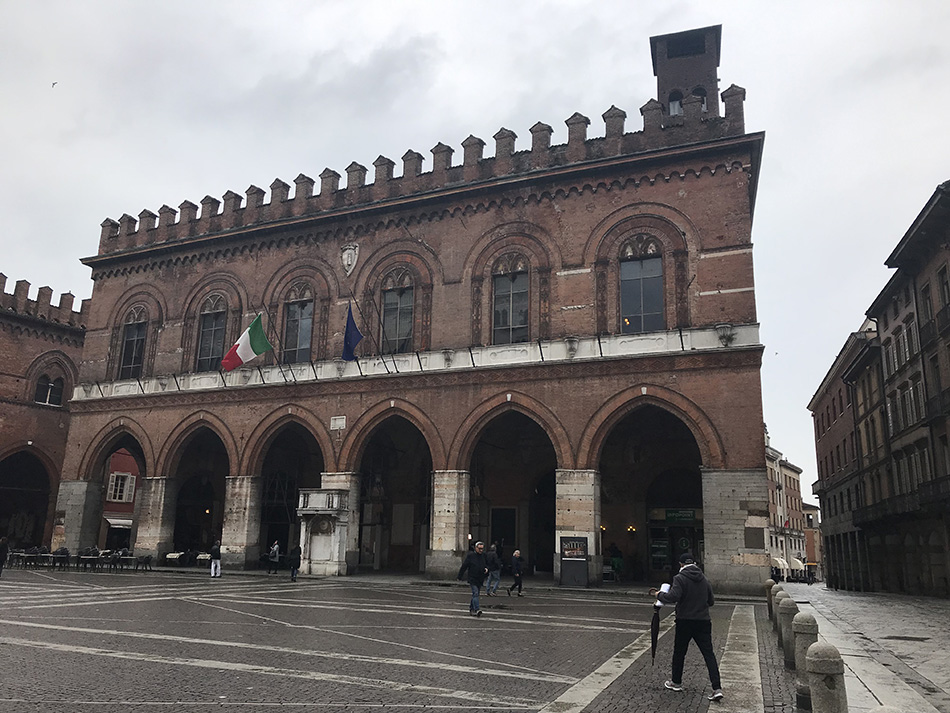
The Town Hall was founded in 1206 and enlarged in 1245, with some modifications in later centuries.


A bronze statue is a tribute to Antonio Stradivari in Piazza Stradivari


The entrance to the Museo del Violino


Antonio Stradivari cello "Stauffer - ex Cristiani" 1700


Here is a recording of this cello from the Museo del Violino. Click HERE.

Stradivari guitar "Sabionari" 1679


This guitar and the following 1566 Amati violin are featured in a performance recording from the Museo. Click HERE to view.

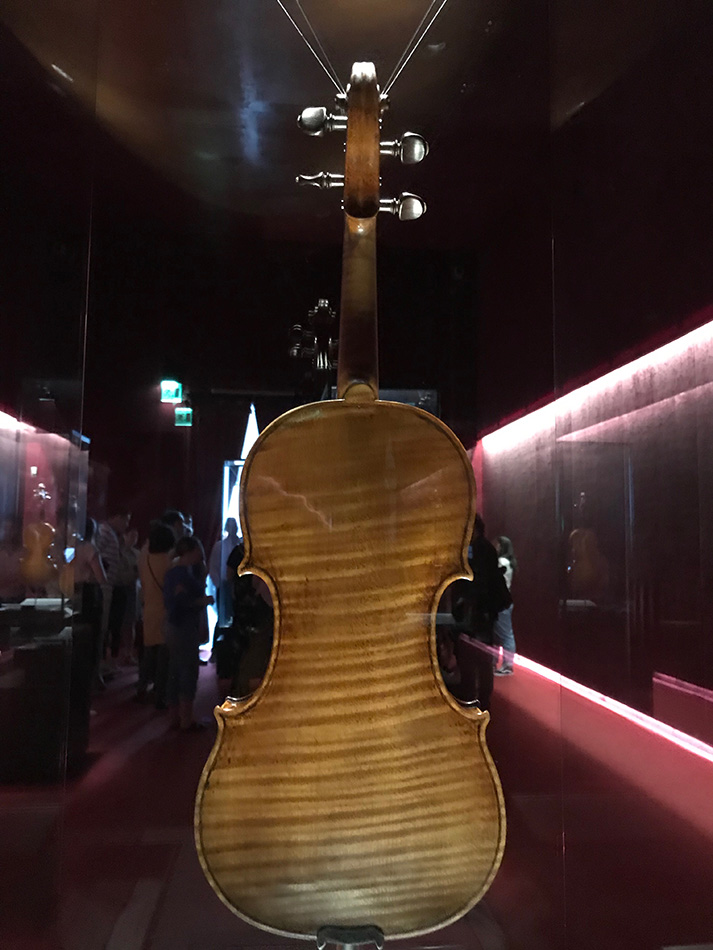
Andrea Amati (ca. 1505-1577) violin "Carlos IX" ca. 1566.
Notice the remarkable one-piece back. It's rare that a maker can find a single piece to serve as the back. Most are made by joining two pieces. There are many examples of one-piece back violins in the collection


Giuseppe Guarneri "del Gesù" (1698-1744) violin "Stauffer" 1734:


Violin by Stradivari "Hellier" (1679) with elaborate purfling inlay:


I took a break at noon to hear a recital in the beautiful auditorium at the Museo. Lena Yokoyama performed solo on the Stradivari "Clisbee" 1669 violin. The instrument had been placed on a cloth-covered table for her. She did not walk in or out with the violin. At the conclusion of the recital, she placed the fiddle back on the table as the armed guard quickly moved into place at the table. A museum official entered soon after to remove the violin in a case.

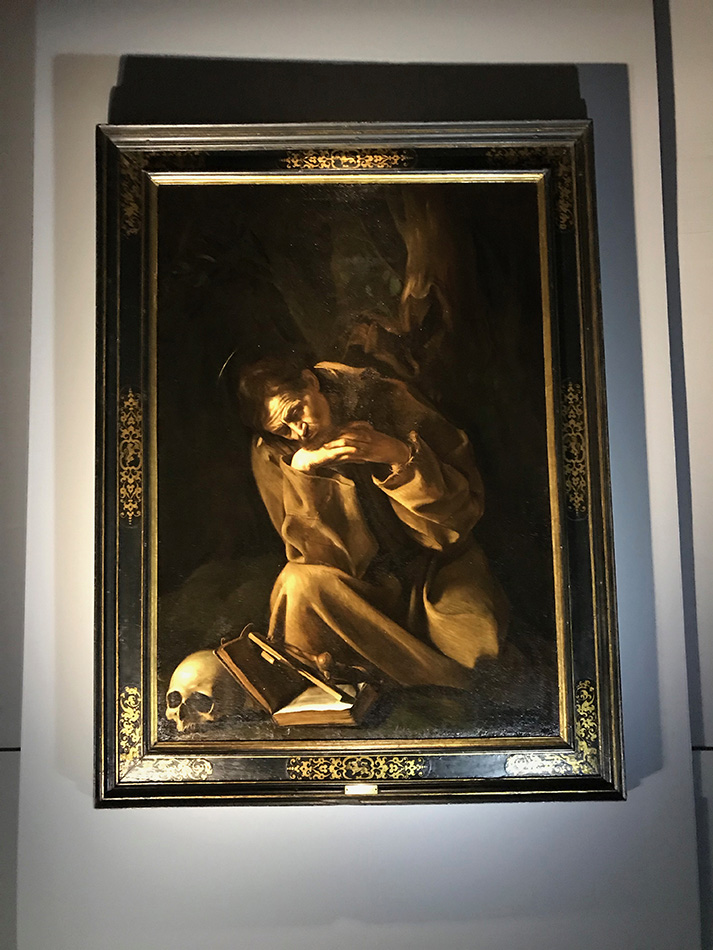
After visiting this astonishing collection of instruments at the Museo del Violino, there was one more thing to see in Cremona. Here is another painting by Caravaggio, at the Museo Civico. In contrast to the Caravaggio paintings in Rome and Florence, which attract huge crowds of tourists, this museum is little known. I was able to sit in a comfortable lounge chair in front of the painting alone with no distractions.

Caravaggio, St. Francis in meditation, early 1600s


Thursday, July 4, 2019

Florence and treasures of the Renaissance #2

Santa Croce

This Franciscan church is the burial place of some of the most illustrious Italians. Here are the tombs of Michelangelo, Galileo, Machiavelli, Rossini, and Marconi, inventor of the radio. Works of art by major figures adorn the interior.


The altar of Santa Croce


Standing before the tomb of Gioacchino Rossini


Here is the piazza below my apartment. The apartment is directly above the arch in the center background. A fruit and vegetable stand sets up every morning. The butcher shop is in the building behind, on the right. There are restaurants and bars, and most important, a gelato shop.


For two weeks I crossed this piazza daily and walked five minutes to attend Italian language classes at the ABC Centro di Lingua


On my way to school I passed by this apartment building. It's curved shape indicates that it was an ancient arena.


View of Florence and the Arno River. Santa Croce church is at center right. The Duomo, or cathedral, is to the left, then Giotto's tower and the Baptistry. Far left is the Palazzo Vecchio.


The Duomo and Giotto's Campanile. Construction on the Duomo began in 1296 and lasted until 1436 with the completion of the dome designed by Brunelleschi. The campanile is 278 feet tall and was begun in 1334 when Giotto was 67 years old. 


Side view of the Duomo showing Brunelleschi's dome:


Detail of the marble carving on the façade:


Interior of the Duomo. Note the elaborate paintings of Brunelleschi's dome, and the marble inlaid floor. Otherwise, the is little decoration inside the church.


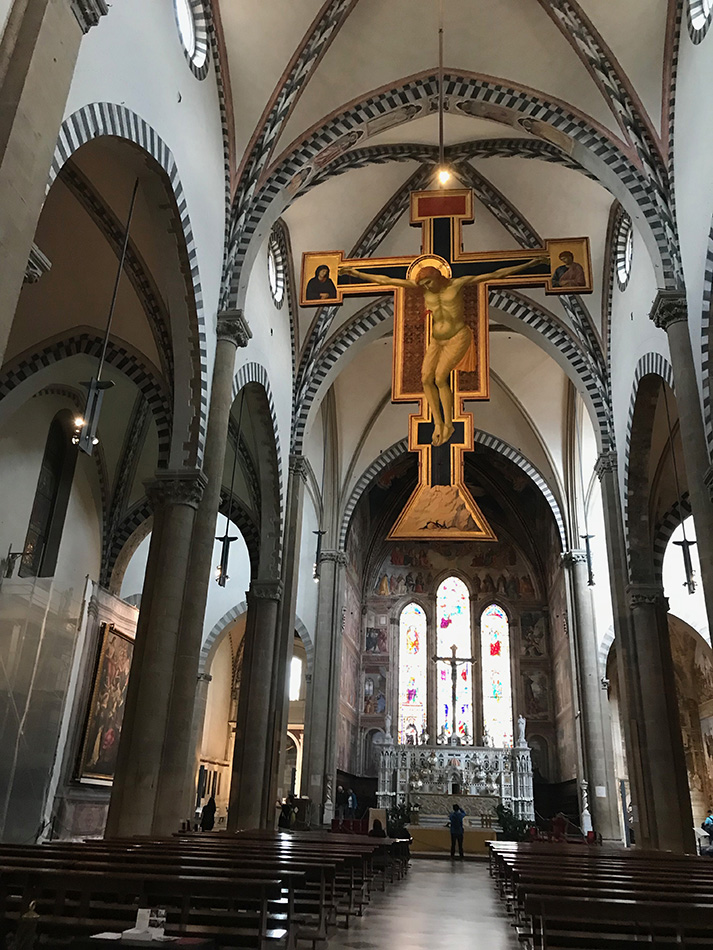
Santa Maria Novella church, with local guide Viviana. The first stone was laid in 1279. The lower part of the façade was decorated in green and white marble in 1350; the upper part was completed in 1470


The crucifix is by Giotto (1267-1337) first appears in documents in 1312, so probably was made at the end of the 1200s, later restored in the 1980s


Fresco by Massaccio (1401-1428), Holy Trinity (1425-26)


Final view of Florence from the Bardini Gardens


Next stop on the Grand Tour: Cremona

Florence and treasures of the Renaissance #1

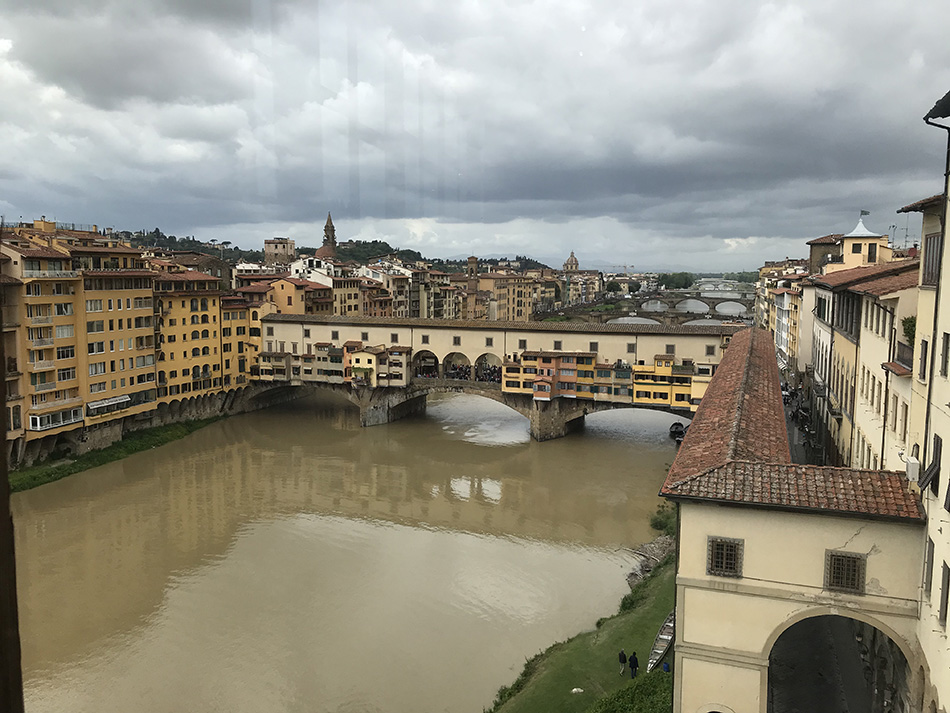
What a thrill to arrive in Florence for a 17-day visit. So much to see, so much to do! So I start with the Uffizi Gallery. Here is a view of the Ponte Vecchio spanning the Arno River as seen from the Uffizi. Click on any photo to enlarge.


The Uffizi is home to great sculpture and paintings of the ancient Greeks and Renaissance Italians. The Medici family collected and commissioned the items in the gallery.

Bacchus with grapes, Greek marble, 1st-2nd century CE, with 16th century restorations:


Giovanni Caccini (1556-1613), Hercules and Nessus. 
This piece has been in the same location since 1595:


Cupid and Psyche, unearthed in a garden on the slopes of the Celian Hill in Rome in 1666. The work, which can be dated to the second half of the 2nd century CE, is a Roman interpretation of a Hellenistic original developed in the late 2nd century BCE:


Paolo Uccello, The Battle of San Romano, ca. 1435-40:


One wing of the Gallery, lined with sculptures, and ceilings covered with elaborate paintings.


Sandro Botticelli, Spring (late 1470s or early 1480s):


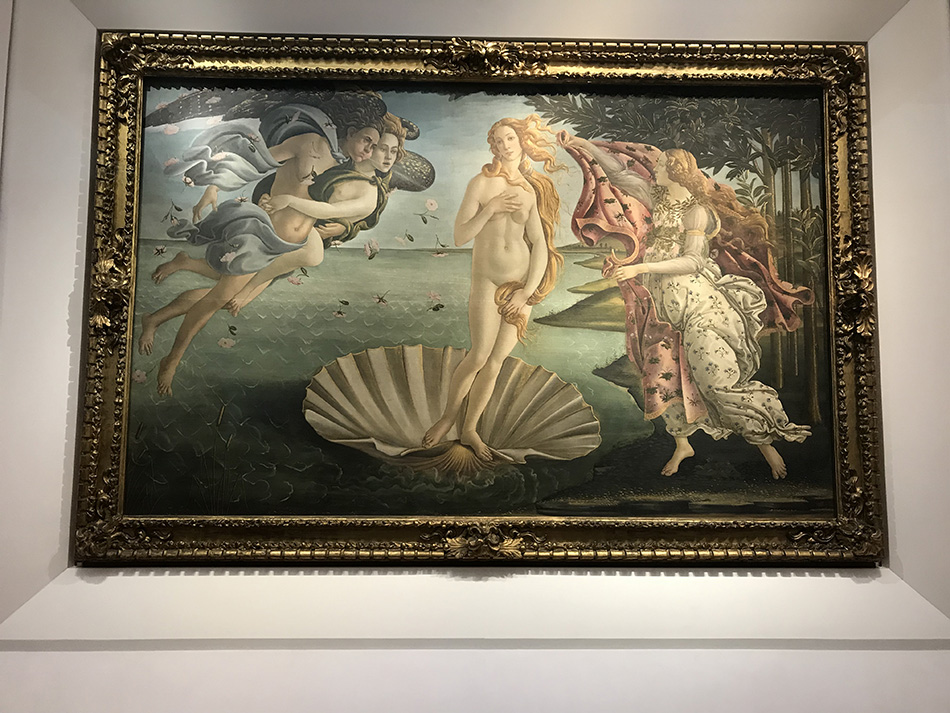
Botticelli, Birth of Venus (ca. 1485):


The Accademia Gallery is a smaller museum than the Uffizi and houses several sculptures by Michelangelo (1475-1564), including his David and many unfinished pieces.


Michelangelo Pietà


Michelangelo, Prisoner, unfinished work for the tomb of Pope Julius II


The Accademia contains a collection of historical musical instruments.
Here is a cello by Nicolò Amati from about 1650


Tenor viola 1690 by Antonio Stradivari:


By now, I am suffering from Stendhal Syndrome.

Marie-Henri Beyle (1783–1842), better known by his pen-name Stendhal, was a 19th-century French writer. Best known for the novels Le Rouge et le Noir (The Red and the Black) and others.

In 1817 Stendhal was reportedly overcome by the cultural richness of Florence he encountered when he first visited the Tuscan city. As he described in his book Naples and Florence: A Journey from Milan to Reggio:

As I emerged from the porch of Santa Croce, I was seized with a fierce palpitation of the heart (that same symptom which, in Berlin, is referred to as an attack of the nerves); the well-spring of life was dried up within me, and I walked in constant fear of falling to the ground.

The condition was diagnosed and named in 1979 by Italian psychiatrist Dr. Graziella Magherini, who had noticed similar psychosomatic conditions (racing heart beat, nausea and dizziness) amongst first-time visitors to the city.

In homage to Stendhal, Trenitalia named their overnight train service from Paris to Venice the Stendhal Express.

Click HERE for the next page on the Italian tour